Trans* Feminism

The Unspeakable Things Have Been Spoken 0

By Sophia Simon-Bashall

Laurie Penny. If you’ve not heard the name before, it’s about time you paid attention. I’m a little biased perhaps, as Penny is nothing short of a hero to me. But honestly, she’s great. She’s recently released a book in the U.K., to be released in the U.S. in September. It’s called ‘Unspeakable Things’, and hell, she talks about exactly what girls are told not to. If you’re looking for an easy going, ‘yes you can be a feminist, love pink, wear false eyelashes and shave your legs’ book, this is not for you. Laurie Penny in general, is probably not for you. She is not interested in sugar-coating this movement, making it appealing to the masses. In her eyes, its appeal should just be a given. Frankly, she thinks this kind of lipstick feminism is rather silly. For her, it’s about the nitty-gritty, the things that nobody likes to talk about. But she’s talking about them, and she certainly won’t be silenced any time soon.

Penny interlinks serious analysis of a range of issues, with the ways in which she has personally been affected, making for a very interesting and thought-provoking read. However, the personal side is no sob story – it’s a cold, slightly bitter narrative, at times, relaying the harsh truths of eating disorders, rape culture, and more. There’s no sugar coating, it’s completely honest. And yet, she’s not claiming to speak for everyone, which is an irritatingly common mistake in discussion of these topics. In fact, she regularly stresses otherwise, pointing out that she is a white, middle-class woman; therefore privileged, and unable to tell every woman’s point of view. It is often assumed that feminist texts speak for all women, and often writers assume this ‘voice of the people’ stance. It is incredibly refreshing that Laurie Penny openly refutes this.

The book is in many ways a rant. It is an intense outlet of anger about the world; about neoliberal capitalism; about patriarchal constraints; about transphobia; about white/male/heterosexual/cis-gender/middle-class privileges – you name it, Penny is probably pissed off about it. But it’s still very eloquently written, aside from the regular effing and blinding. She covers ground such as mental illness, single motherhood and abortion. It’s true, these are all topics covered before, but here is the view of a young woman – a view from someone of this generation. However, more importantly, she attacks things barely touched upon before like issues with modern feminism, cybersexism, and uniquely, men’s issues. But it’s not what you think. The chapter on guys is actually the best part of the book. If you only read one part when you pick it up in the bookshop, make it the ‘Lost Boys’ chapter. It’s genuinely eye-opening, and you won’t regret it.

Her unrelenting wit and her ingenious prose style make this book brilliant. Though it was a moving and engrossing read, there were moments when I found myself laughing out loud, because, yes, Laurie Penny kicks patriarchal ass. It is full of dry humour - fitting for the mood of the book and the nature of the issues discussed. Highlights include; “those who are so eager for women and girls to go back to the kitchen might think again… you can plan a lot of damage from a kitchen. It’s also where the knives are kept” and “Having it all now means having a career, kids, a husband, a decent blow-dry – and that’s it.” And that’s only in the introduction.

I’m not saying I agree with every little detail in the book. In fact, there were several points made that I frowned at and found myself strongly disagreeing. But that doesn’t mean I don’t value what’s said – quite the opposite. It’s a reminder that we don’t all have to agree on everything. It’s a necessary aspect of this movement – differing opinions, challenging others and being challenged, that’s how the Suffragettes arose! What matters is that, at the very core, we are united in ideas and are willing to fight for social change. This is how we will make equality a reality.
Orange Is the New Black - could it start a new trend? 0

By Alice Koski

OITNB Orange Is the New Black   could it start a new trend?

Orange is the New Black is my new obsession. Hilarious, dramatic and centred on women who are dealing with real, hard-hitting issues - what’s not to like?

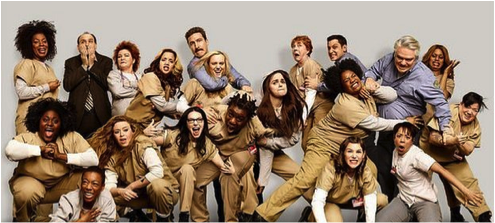
If you haven’t heard about Orange is the New Black (or OITNB for short), let me fill you in. Original to Netflix, OITNB is a show which first aired in 2013 and is now two seasons strong. It’s been a huge hit with both viewers and critics and season three is currently in the works. Set in a women’s prison, the show follows its main character Piper (played by Taylor Schilling) along with many others as they serve their sentences with each other. It’s fascinating, hilarious and sometimes heartbreaking to see how the characters deal with the different issues, from addiction and loneliness to tampons and chickens (watch to find out!).

But the thing that strikes me most about Orange is the New Black is that it’s one of the only popular shows out there that represents a truly diverse range of women and portrays each of them as complex individuals. Frustratingly, a lot of mainstream television fails to do this: women are often typecast into narrow roles beside their male counterparts, such as The Girlfriend or The Love Interest. This categorising of women sends out a message that there is nothing more to these female characters than the one-sided personas they are presented with. Furthermore, mainstream television often fails to properly represent minority groups such as LGBTQ+ women and women of colour, which again presents audiences with false ideas about what women are like and how they should be.

However, I believe that every woman who watches Orange is the New Black will be able to relate to at least one of the characters. The diversity of the cast is unparalleled - there are white women, black women, hispanic women, asian women; there are women of all shapes and sizes; there are gay, straight, bisexual and transgender women (Laverne Cox is brilliant); there are old and young women. Writer for the show Lauren Morelli has written that ‘Casting the show was thrilling. The array of skin color and the range of bodies were unlike anything I’d seen on television before… it felt important to be telling stories about women who are largely ignored in the mainstream media.’ It is not just OITNB’s inclusion of these different types of women that is appealing, however, but its portrayal of them as complex individuals. Although these women are criminals, the audience is shown that this is and not the be-all and end-all of who they are. OITNB digs deeper than surface level by revealing the characters’ pasts, complexities and vulnerabilities. No, they’re not perfect role models, but they’re real and they’re complex, and they are not limited to being The Love Interest or The Girlfriend. This is something we need more of, not just in television, but throughout the media.

Unlike most media that is about or aimed at women, OITNB does not rely on glamour and style to pull in viewers. The actresses’ make up is minimal and everyone wears the same unflattering prison uniforms. Of course, make up and styling is not inherently a bad thing, but it’s refreshing to see a show that isn’t obsessed with appearance. Kate Mulgrew, who plays Red, says ‘I think women get tired of the standards that Hollywood continues to impose. On our beauty, on how we should look, on how we should behave, on what is sexually desirable, on what it is that men want. Finally, this is a series about us, and people dig it.’ I think she’s hit the nail on the head. Unlike a lot of today’s media, Orange is the New Black does not set out to make its viewers feel inferior. At the heart of the show’s success is, I think, it’s raw and realistic portrayal of women. And quite frankly, I think it’s almost a criminal offence that the world has gone without it for so long.

“Ain’t I a Woman?”

christiana1 Aint I a Woman?

By Christiana Paradis

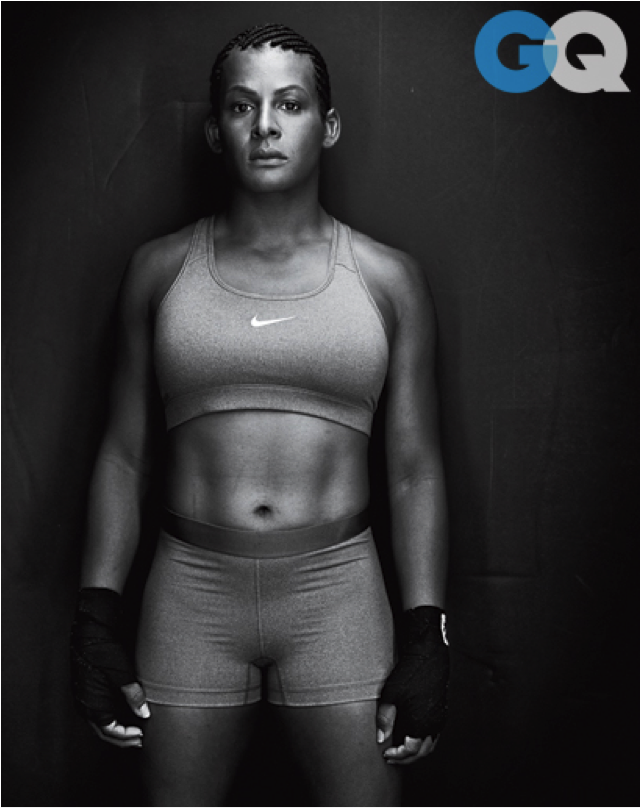
Meet Fallon Fox: the only transgender professional MMA fighter. Standing at five feet six inches, and 37 years old, Fox has many obstacles in front of her, especially as an MMA fighter. Though 2013 has presented society and the media with several athletes who have come out as LGBT - including professional basketball player, Jason Collins - it is difficult to compare these to Fox. Most athletes were welcomed into the LGBT community and after a couple weeks of headlines all of the buzz died down.

Fox has fought her way to the top because it is what she loves to do; however fans of the sport do not always reciprocate. Internet trolls frequently comment how “manly” Fox looks on promotional pictures and it is not uncommon for Fox to hear comments like “Kick her in the nuts” during matches. Furthermore, commentators were playing songs such as “Dude Looks Like a Lady” before Fox would enter the ring - but this isn’t bullying… bullying is just for kids, right?

Fox fights every day for herself, for her health, but also for respect. She states:

MMA is the most dangerous sport there is for a transgender, with all the body contact, I know that, but it just turned out that I was good at it, you know? You pursue what you’re good at…. I realize that it’s kind of amazing that I hit girls. You’re brought up not to hit girls, that it’s the worst sin, and that’s what I do. But you know, gender is the last thing I think about when I’m fighting. It’s the one situation where I don’t think of gender at all.”

If gender is the last thing Fox is thinking about before she goes into a ring, then why is it the audience’s first? People are paying to watch women get in a cage and fight and that is what Fox does. She delivers what is asked of her, so why do commentators and audiences think they have the right to define her? As GQ states in their article, “Fallon Fox: The Toughest Woman in Sports” Fox is up against multiple oppressions specifically “When you are a transgender athlete, a lesbian transgender athlete, a lesbian transgender athlete who fights women in a cage, a lesbian transgender athlete who fights women in a cage and fathered a daughter, a lesbian transgender athlete who fights women in a cage and fathered a daughter and served as a man in the Navy.”

While I commend GQ for running a story that portrayed Fox honestly and favourably, I have an issue.

  • Why GQ?
  • Why a magazine that markets itself to men?
  • Maybe because it’s an article about MMA, which typically is marketed towards men… but then why wasn’t this article included in the “Women” section that GQ purposely excludes all female related articles to?
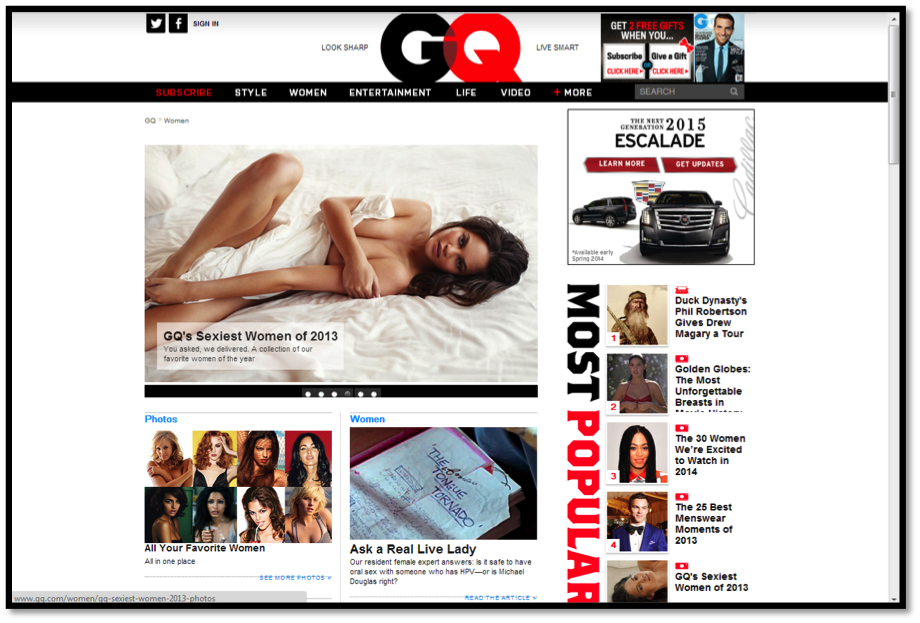
  • Also… if all of the other articles about females that GQ writes looks like this:

christiana2 Aint I a Woman?

…then what are they subliminally saying about Fox? They’ve portrayed and treated Fox as they feature men and not as they portray women in their magazine. Thus, despite writing an honest piece about Fox’s struggles as a transgender female in MMA they’re still featuring her as a man in their magazine.

Thankfully, Fox is too determined and focused to be bothered with such petty nuances, “I just try not to think about all of the obstacles all at once. I tell myself, you know how to win. Sometimes you get beat up, but you’ve always won.”