Looking for Something?
Posts Tagged for

Law

Why We Need The Istanbul Convention

Author:
istanbul-petition

By Anna Hill

Trigger Warning: sexual violence

The Istanbul Convention is a document that sets out a legal framework to tackling violence against women and girls. It sets minimum standards for the government to meet when tackling this issue and will ensure that governments prevent violence, protect those that experience or could experience that violence and prosecute perpetrators. Many countries have ratified [i.e. accepted into law] the convention already such as: Denmark, France, Italy, Serbia, Spain, Turkey and Albania. To read more check out this page.

I asked fellow PBG writers why we need the Istanbul Convention so badly:

We need the Istanbul Convention because we are simply not doing enough to protect victims of sexual violence, educate the general public on this issue, and punish the perpetrators of such acts. I support the ratification of the Istanbul Convention because as a survivor of child molestation I need support and security I need the assurance that there will be less people like me - less people who suffer from flashbacks and panic attacks due to those events and whose lives are affected by the violence they have faced. - Anon

I could list off a lot of statistics about gender based violence. The fact that 1 in 5 women in the UK will experience sexual assault in her lifetime; that over 20,000 girls under 15 are at risk of female genital mutilation each year; that one incident of domestic violence is reported to the police every minute. I could tell you that 1 in 3 school girls experience unwanted sexual touching; that 85,000 women are raped each year; and that 2 women a week in the UK alone are killed by a current or former partner. The numbers are shocking, and they’re a big part of the reason why we need the Istanbul Convention. But these are not just numbers- behind every number is a person. That Some of these people are people I love, people you love. One of those people is me and it might be you. The fact is that I don’t know a single woman who doesn’t know someone who has suffered from gender-based violence, or is a survivor of it themselves. We need to do something about this. This is why we need the Istanbul Convention. - Yas

The Istanbul Convention was signed by the UK government on 8 June 2012. Since then, the government has supposedly taken steps to facilitate the ratification of the Convention – such as creating legislation on forced marriage and FGM – yet continues to stall fully ratifying the Convention into UK law. Why is the government hesitating in creating a safer country for women across the UK? Every 30 seconds, the police receive a call related to domestic violence. Each year, up to 3 million women experience violence in the UK. In ratifying the Istanbul Convention, the government would be committing to implementing measures to ensure that the UK is a safe place for women. The measures within the Istanbul Convention form a structure under which violence against women would be prevented and women and girls would be protected, with prosecution of violence. It would implement safe spaces and refuges for survivors, allowing women to thrive rather than live in fear. Ratifying the Istanbul Convention in the UK is long overdue - countries such as Italy, Spain and France have already ratified the Convention. We all have the right to a life free of violence and fear. The Istanbul Convention facilitates the measures necessary for this, and its time the UK government responded to its commitment to ratify this. - Amy
Check out the petition, website and twitter for more info and ways to get involved!
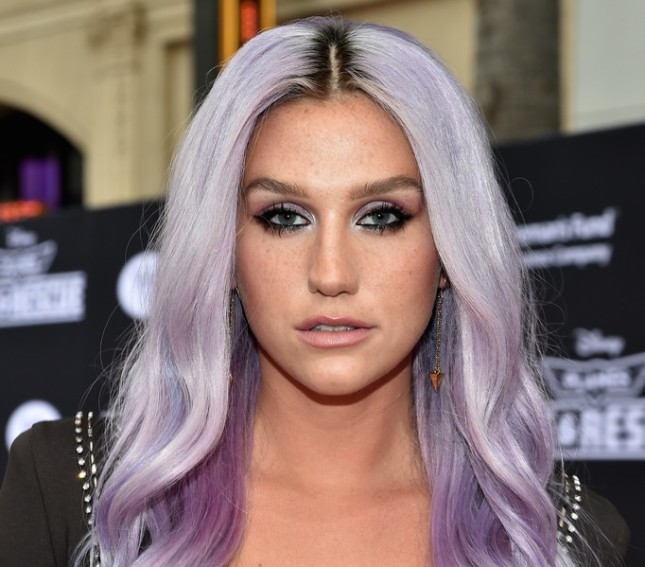
Innocent until proven guilty? The case of Kesha

Author:
Kesha+Long+Hairstyles+Long+Wavy+Cut+f1mO2mWnoo6x

By Issy McConville

TW Over the last couple of days, the #FreedomForKesha hashtag has seen an outpouring of support for the singer, who is currently embroiled in a legal battle against her producer, Dr. Luke, on the grounds of sexual assault. However, it has been almost a full year since Kesha first brought the charges; a year which has seen her disappear from the public eye, whilst Dr. Luke continues to produce records, finding success with artists such as Usher and Nicki Minaj in the past year. Kesha also named Sony in the case, claiming the label knew of her abuse, but turned a blind eye for almost 10 years.

Sadly, at this point, it is likely that Kesha’s career will never recover, simply because she decided to speak out against her abuser, and about the industry which was implicit. The silencing of Kesha’s voice, and the destruction of her career, is a telling reflection of the inherent misogyny of the music industry, and of society as a whole.

Comment pieces about the case have continued to appear on my Facebook timeline. Scrolling through the comments section - I should perhaps have learned by now that this will be nothing but trouble - I happen upon comments such as ‘there is no detail of the supposed rape, just a load of feminist garbage’ and continued calls for Dr Luke to be, ‘innocent until proven guilty’. Yes, of course, innocent until proven guilty, this is a fundamental human right - but tends to be a luxury that is only afforded to the accused.

While Kesha’s career has ground to a halt, Dr. Luke is continuing to work. While Kesha’s claims are being cross examined by the public, and being blamed for crying wolf with a false accusation, Dr. Luke continues to dominate in the music industry with no retribution. And this is a pattern which is being replayed all over the world. According to statistics from RAINN (the Rape, Abuse, Incest National Network, recorded here - https://rainn.org/get-information/statistics/reporting-rates) only around 2% of rape claims are proven to be false, and in fact, only a little more than 30% of rapes are ever reported to authorities. Dispute the accuracy of these figures all you want - there is a clear discrepancy between actual false rape claims and the amount that are derided as being such.

However, the ideology of victim blaming continues. We live in a world which shames a woman for daring to speak out against an abuser but makes excuses for the man until the very last minute. Just look at problematic photographer Terry Richardson. Countless models have made claims of sexual abuse and an abuse of his power, and yet he continues to work with the biggest celebrities and be popular in the public eye. We just aren’t interested in hearing about his misdemeanours, much like those of Dr. Luke. In this case, perhaps Dr. Luke is innocent. But, as he was also named as possibly being the abuser of Lady Gaga, perhaps not. Irregardless, Kesha’s experience is just one of countless similar stories that reveal the narrative of victim blaming that exists. Kesha may have sacrificed her career to name her abuser. And until we stop believing that every rape claim is false, we play into the hands of the abusers, and allow that 70% of rapes to still go unreported.

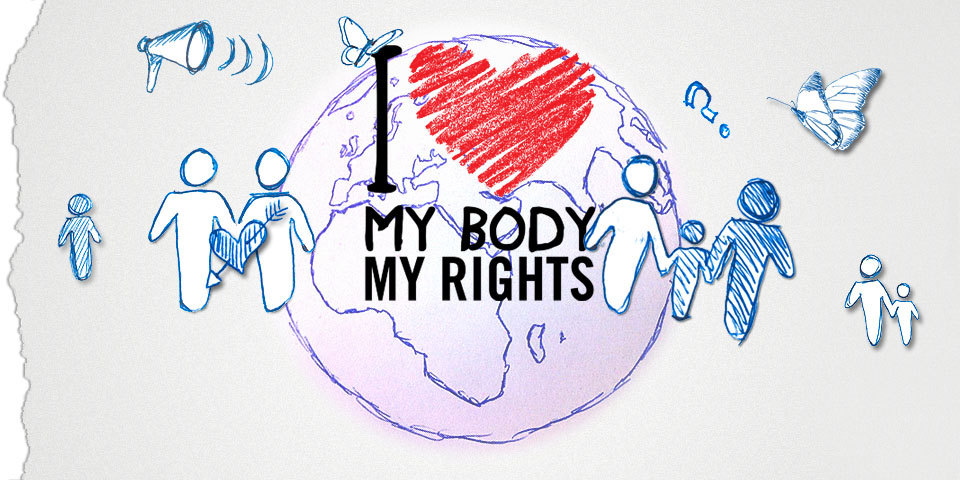
My Body My Rights

Author:

By Chloe Hutchinson

amnestycampaign

It should be a woman’s right to choose whether or not to have an abortion. It is a deeply personal decision that she should be able to make irrespective of the opinions of the government or the Church. Unfortunately, this right, which many of us take for granted, is not given in many parts of the world, including to our neighbours across the sea in the Republic of Ireland and Northern Ireland.

Whilst it is part of the United Kingdom, Northern Ireland has a devolved government that has control over many things, including reproductive rights of its citizens. This means that Northern Ireland is not included in the 1967 Abortion Act meaning that it still follows the laws in the 1861 Offences Against the Person Act – passed in the Victorian era! It is illegal for both women to administer, and for others (like doctors) to supply, drugs with the intent to cause an abortion. Breaking this law - as stated in the 2013 Protection of Life During Pregnancy Act - is punishable by up to 14 years imprisonment.

Even though it is a criminal offence to have, or aid, in an abortion or causing a miscarriage, this law is rarely enforced. In fact in March 2013 the Alliance for Choice published an open letter signed by 100 men and women admitting to obtaining or taking abortion pills which are illegal in the region. None have been arrested. This just shows how outdated this law is and how public opinion (and to some extent government opinion) is behind more progressive reform.

One of the most problematic parts of Irish abortion legislation is the 1983 Constitutional Amendment, which actually takes the law backwards from 1861 rather than forward. It states that the right to life of the unborn child and the mother are to be treated as equal by law. This reduces the woman to no more than a vessel.

Under current legislation, last updated in 2013, abortion is only legal in two cases: 1) when there is a real and substantial risk to the woman’s life through both physical complications and the threat of suicide (but not in cases where the pregnancy was a result of rape or incest) and 2) when she can afford to travel to England where the operation is carried out (and it is in accordance with our laws). In 2012 around 4,000 Irish women travelled to England to have an abortion, 124 of whom were under the age of 18. Furthermore post-abortion care is provided for by the state in Ireland. This is hypocrisy and essentially says that abortion is acceptable if you are rich thus reinforcing the class gap. Women with money travel, women without money have children.

Whilst economic barriers are in place for many of these women, all of them face the cultural and social stigma surrounding abortion. It carries a very heavy stigma and many live in fear of discrimination and exclusion from neighbours, work colleagues, friends and even family that may discover that a woman has had an abortion. Religion is incredibly important in both the Republic of Ireland and Northern Ireland where 84% and 43% of the population is Catholic. The link between the state and the Church is a key reason for the pro-life policies even when the public are calling for pro-choice.

Just because it is legal to have an abortion does not mean that anyone has to have one. It merely gives the opportunity to women who want to. The decision is incredibly personal and affects the individual more than anyone else, therefore their choice should be the most important factor to take into account. It is the choice of the individual, not of the Church.

In gaining access to an abortion on the grounds that her pregnancy is a real and substantial risk to her life (whatever that actually means), women are forced to share their decision again and again, perhaps with up to 7 GPs and doctors. Obviously this takes time; surely action should be taken as quickly as possible when there is a significant risk to life?

This lack of access to free, safe and legal abortions often forces women to take horrific action into their own hands in desperate attempts to cause a miscarriage. Starvation, throwing themselves down the stairs, coat hangers – just some of the things that are tried.

In 1992 a 14 year old, who had been raped by her neighbour, was prevented from travelling to Britain for an abortion after the family asked if the DNA could be used in the trial against her rapist. In 2012, a miscarrying woman was refused a potentially lifesaving abortion because “Ireland is a Catholic country.”

I think we can agree that these laws are outdated, in fact almost medieval! But what can we do?

  1. Continue to campaign for comprehensive, factually correct sex and relationship education across the whole of the UK, not just for England.
  2. Put pressure on your local MP to bring it up in Westminster – whilst the policy is not made in Westminster their influence can have an outstanding impact, especially as there is a public consultation ongoing at the moment until the 17th January 2015
  3. Educate yourselves and others about current legislation and options available – share information.
  4. Get involved in Amnesty International’s “My Body My Rights” campaign - #MyBodyMyRights
  5. Directly support organisations like the Abortion Support Network through donations or volunteering (if possible).

Authors note:

This blog post was inspired by the phenomenal talk on the “My Body My Rights” campaign at Amnesty International Student Conference at the start of this month.


Let’s Ban Revenge Porn (UK)

Author:

By Chloe Hutchinson

revengepornimage

Recently a lot of progress has been made in the campaign to ban revenge porn. It has been debated in parliament, appeared on 2 front pages and been covered by the BBC as well as getting loads of support from MPs, members of the House of Lords and more than 4,500 of you!

Revenge porn is when explicit images are published online by an ex without consent. This causes a humongous amount of damage to the victim’s personal and professional life.

Whilst this is an issue that affects both genders, women are disproportionately more likely to suffer from this kind of abuse than men. The abuse is often accompanied by a lot of victim-blaming and slut-shaming.

In the UK revenge porn is currently still legal when the images are of consenting adults, but things are changing. You can help by signing the petition and by asking your MP to support the campaign in parliament. If you have been a victim and would like to help click here. With your support we can make this illegal!


Hey there!

We are Powered By Girl. We're young women who write for young women. We do it because we believe there's more to 13-25 year old women than clothes, boys and celebrities. So please have a look at our stuff, and join us!

Sign up to get our blogs in your inbox!