Looking for Something?
Posts Tagged for

Class

My Body My Rights

Author:

By Chloe Hutchinson

amnestycampaign

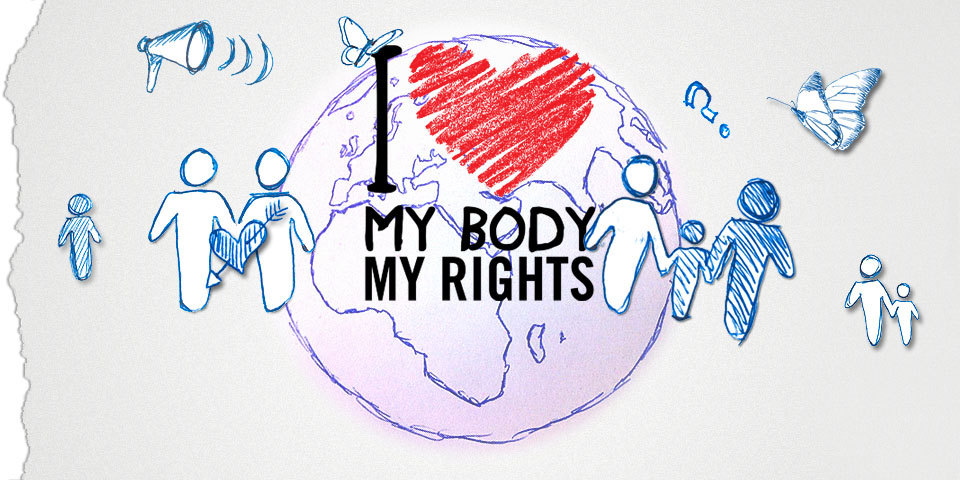
It should be a woman’s right to choose whether or not to have an abortion. It is a deeply personal decision that she should be able to make irrespective of the opinions of the government or the Church. Unfortunately, this right, which many of us take for granted, is not given in many parts of the world, including to our neighbours across the sea in the Republic of Ireland and Northern Ireland.

Whilst it is part of the United Kingdom, Northern Ireland has a devolved government that has control over many things, including reproductive rights of its citizens. This means that Northern Ireland is not included in the 1967 Abortion Act meaning that it still follows the laws in the 1861 Offences Against the Person Act – passed in the Victorian era! It is illegal for both women to administer, and for others (like doctors) to supply, drugs with the intent to cause an abortion. Breaking this law - as stated in the 2013 Protection of Life During Pregnancy Act - is punishable by up to 14 years imprisonment.

Even though it is a criminal offence to have, or aid, in an abortion or causing a miscarriage, this law is rarely enforced. In fact in March 2013 the Alliance for Choice published an open letter signed by 100 men and women admitting to obtaining or taking abortion pills which are illegal in the region. None have been arrested. This just shows how outdated this law is and how public opinion (and to some extent government opinion) is behind more progressive reform.

One of the most problematic parts of Irish abortion legislation is the 1983 Constitutional Amendment, which actually takes the law backwards from 1861 rather than forward. It states that the right to life of the unborn child and the mother are to be treated as equal by law. This reduces the woman to no more than a vessel.

Under current legislation, last updated in 2013, abortion is only legal in two cases: 1) when there is a real and substantial risk to the woman’s life through both physical complications and the threat of suicide (but not in cases where the pregnancy was a result of rape or incest) and 2) when she can afford to travel to England where the operation is carried out (and it is in accordance with our laws). In 2012 around 4,000 Irish women travelled to England to have an abortion, 124 of whom were under the age of 18. Furthermore post-abortion care is provided for by the state in Ireland. This is hypocrisy and essentially says that abortion is acceptable if you are rich thus reinforcing the class gap. Women with money travel, women without money have children.

Whilst economic barriers are in place for many of these women, all of them face the cultural and social stigma surrounding abortion. It carries a very heavy stigma and many live in fear of discrimination and exclusion from neighbours, work colleagues, friends and even family that may discover that a woman has had an abortion. Religion is incredibly important in both the Republic of Ireland and Northern Ireland where 84% and 43% of the population is Catholic. The link between the state and the Church is a key reason for the pro-life policies even when the public are calling for pro-choice.

Just because it is legal to have an abortion does not mean that anyone has to have one. It merely gives the opportunity to women who want to. The decision is incredibly personal and affects the individual more than anyone else, therefore their choice should be the most important factor to take into account. It is the choice of the individual, not of the Church.

In gaining access to an abortion on the grounds that her pregnancy is a real and substantial risk to her life (whatever that actually means), women are forced to share their decision again and again, perhaps with up to 7 GPs and doctors. Obviously this takes time; surely action should be taken as quickly as possible when there is a significant risk to life?

This lack of access to free, safe and legal abortions often forces women to take horrific action into their own hands in desperate attempts to cause a miscarriage. Starvation, throwing themselves down the stairs, coat hangers – just some of the things that are tried.

In 1992 a 14 year old, who had been raped by her neighbour, was prevented from travelling to Britain for an abortion after the family asked if the DNA could be used in the trial against her rapist. In 2012, a miscarrying woman was refused a potentially lifesaving abortion because “Ireland is a Catholic country.”

I think we can agree that these laws are outdated, in fact almost medieval! But what can we do?

  1. Continue to campaign for comprehensive, factually correct sex and relationship education across the whole of the UK, not just for England.
  2. Put pressure on your local MP to bring it up in Westminster – whilst the policy is not made in Westminster their influence can have an outstanding impact, especially as there is a public consultation ongoing at the moment until the 17th January 2015
  3. Educate yourselves and others about current legislation and options available – share information.
  4. Get involved in Amnesty International’s “My Body My Rights” campaign - #MyBodyMyRights
  5. Directly support organisations like the Abortion Support Network through donations or volunteering (if possible).

Authors note:

This blog post was inspired by the phenomenal talk on the “My Body My Rights” campaign at Amnesty International Student Conference at the start of this month.


Thoughts From Latitude – Feminism, Class Politics, and Checking Your Privilege

Author:

By Cora Morris

latitude

British feminism has a class problem.

When I’d looked into going to Latitude in Suffolk earlier this summer I’d been pleasantly surprised to note the number of women performing at the festival. The stand-up comedy line-up at Latitude was almost two-thirds female – suggesting brilliant progression within an industry that is known to be (more than occasionally) sexist. Musical acts ranged from Chrissie Hynde of The Pretenders to Lily Allen (who we all undoubtedly have opinions about) and Haim, the trio of Californian sisters who’s lyrics I’m yet to find too much feminist fault in. There was cabaret, theatre, and even an appearance from the English National Ballet. The poetry area was a favourite, with Hollie Mcnish’s spoken word stealing the show entirely. It was safe to say I was catered for - I felt incredibly lucky to be in a place where so many of the arts came together in a way that was of such a high quality, and where female performers were not dismissed or looked down upon in the slightest.

It is pointless to deny that Latitude is anything but a very stereotypically middle-class festival, and this is clear from the sheer scale of variety throughout the acts and attractions - are literary stages and quinoa stands really abundant in other festivals? We, as crowds, were referred to as ‘Latitude Lefties’ several times and ‘Guardian Readers’ at least twice - the privileged lives of many of the festival-goers was obvious. I’m not sure where the association between academia and class formed but it seems to be a false attitude in England which we supposedly can’t quite get away from. The problem is, feminism gets added into the equation too by way of being wrongly perceived as academic in its subject matter.

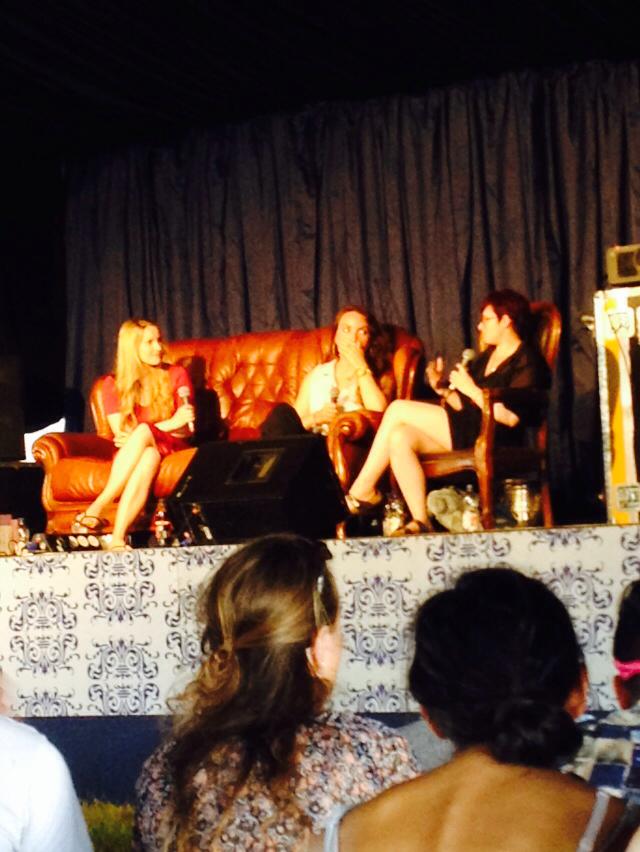
Awaiting a panel with Laura Bates (of The Everyday Sexism Project), Laurie Penny (PBG Blogger Sophia reviewed her new book, Unspeakable Things, last month) and Zoe Pilger (whose new novel, Eat My Heart Out, is becoming a personal favourite) regarding feminist fiction I look around to see who I’m sharing the literature tent with, and who is sticking around for a talk that I thought would have been one of the less popular of the schedule. I’m met by the unsurprising sight of mainly middle-aged women, a selection of younger, artsy looking types and a scattering of men - boyfriends, maybe, though I’m glad to see a few raise their hands when and we are asked who in the crowd identifies as a feminist. Some of them scurry away hilariously when Penny begins criticising Facebook page The LAD Bible, followed by her sniggering that ‘Maybe they run it… we’re scaring away the men, everyone!” Naturally, we all laugh. The talk continues and I begin to consider whether this evermore middle-class seeming crowd reflects the limited demographic feminism reaches out to and engages in Britain. Yes - the answer is yes.

I think the examples speak for themselves - to quote Marianne Wright-Eldman, ‘You cannot be what you cannot see’. The fact that significant numbers of this country’s most prolific feminists appear frequently as writers for newspapers such as the Guardian - a wonderful and insightful left-leaning publication, but one that undeniably primarily appeals/sells to Britain’s (if only slightly) privileged – says a considerable amount.

We do not have voices in this country at present that are speaking to everyone else. Not prolific ones, at least. Feminism is becoming almost trendy amongst the middle classes whereas it is much less so elsewhere. Intersectionality is so key - the ways we are increasingly considering the oppression of everyone is vital to the progression and expansion of feminism and its values. However, as I find myself being told more and more frequently that I’m ‘a privileged white girl with nothing to complain about’, thus ‘pretending men are causing problems because they’re easy targets’, I am wondering whether awareness of feminism’s modern form is really being reflected as what we’re all about. It has become a movement that strives for intersectionality, and space in the conversation for people other than ‘privileged white girls’. The problem is that in the public eye, we are represented by what are as a majority people who fall into this ‘category’ (so to speak). I don’t think that we can expect to engage a majority if we are being solely represented by a relative minority.

I am not by any means suggesting that the voices are not there. They are. They are all over Tumblr and Twitter and WordPress and LiveJournal. They are writing papers and reports. They are posting blogs, and getting angry with MRAs, and scanning zines they’ve drawn into their computers. Lots of them have been oppressed in different ways. Lots of them are angry. They are angry because their invaluable voices which make up substantial proportions of the population are not being heard in the public eye. Why are they not represented by our media? They are essential voices in this brilliant and potentially revolutionary conversation we are having, and to an extent, they are probably bored of being spoken for rather than doing the speaking themselves.

There is a great deal to say for checking privilege. A good number of feminist journalists in the public eye are semi-militant about this, with Laurie Penny claiming that she is “constantly checking” her privilege “in the manner of an anxious homemaker constantly checking that the gas is off’”. However, when Caitlin Moran says she “literally could not give a shit” about the representation of people of colour in Lena Dunham’s show Girls - well, that statement speaks for itself.

I think Caitlin Moran is brilliant - really, I do. She has done a lot for the cause in this country and elsewhere, which makes her inspirational by default. Besides, as Penny also mentions - “It’s easy to fuck up, especially when you live in a world that tells you, repeatedly and often, that as a white, straight middle-class woman, yours is the only story about women worth articulating.” But, again, it means we are getting representation that is presumed to speak for the majority and yet does not do much more inclusive opinions any justice.

We are not different species. Class shouldn’t be an issue. The idea of it probably shouldn’t exist. But unfortunately, it does. In Britain, it means a great deal to some, as I’m certain it does elsewhere. I use it as a means of acknowledging my privilege, though I’m always conscious of coming across as snobbish. It is there, albeit as another way of putting all of us into boxes by those who wish to do so.

Feminism is valuable for all of us, in all of the boxes. It is just as valuable for the CEO that raised her hand in the Q&A in that literature tent complaining that she was not listened to in the office as it is for the millions that are not in similarly highly paid positions. Again, there are different kinds of oppression - some of those might affect particular boxes more than others. All of the voices are there, and they are all speaking. But at present, not all of them are being amplified quite as loudly as others.

Abuse Doesn’t Exist in a Vacuum: Rotherham Is Not About Race

Author:

By Elli Wilson

jqb6ca0pn4mkt1xhd9lt

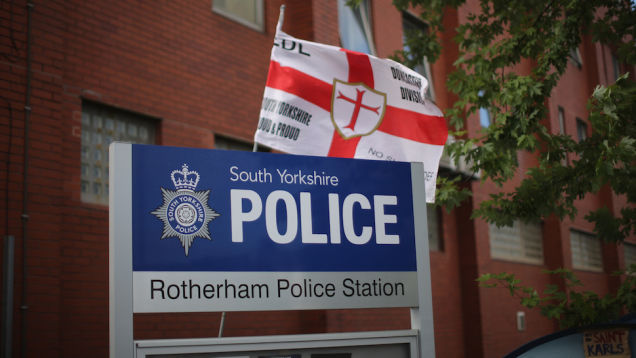
Alexis Jay’s report on the abuse of over 1400 children over a 16 year period in Rotherham, and the “collective” failings of the police, social care and the local authority makes for tragic, uncomfortable reading. Unfortunately, whilst the scale and extent of the victims’ suffering and the authorities’ failures were certainly shocking, they did not surprise me. Britain today is still a deeply prejudiced country in which sexism and classism run deep, social services are underfunded and overstretched and young, underprivileged victims are likely to be dismissed as ‘unreliable’ or even complicit in their own abuse. In such conditions, it is hardly astonishing that vulnerable children and young people are abused and then failed by those meant to help and protect them.

With so much public anger and disgust over what happened in Rotherham, there would seem to be no better time than the present to start a national conversation about what causes rape and sexual abuse and how it can be prevented. However, in a depressingly predictable state of affairs, much of the coverage of the horrific abuse has focused on the fact that the perpetrators were predominantly British Pakistani and most of the known victims were white working-class girls.

In reality, perpetrators of sexual crimes in Britain are predominantly white. The only trait that almost all perpetrators of rape and sexual abuse share is their maleness. Sexual violence is not a crime committed by one ethnicity against another; it is a crime of male violence against women and children. Alongside class, gender is the overriding factor in the Rotherham abuse case, as with all other incidents of sexual violence.

By focusing on the ethnicity of the perpetrators in Rotherham, there is a danger that the threat of rape and sexual abuse will be othered and obscured. It is far easier and more comforting to think that such horrifying crimes are only a problem for certain sections of society, than to face the fact that in 21st century Britain children - primarily girls - are abused and exploited across all socio-economic groups and by men of all races. This is not a problem that we can safely categorise as belonging to one section of society whilst shaking our heads disapprovingly; the causes are deeply rooted in our attitudes and our establishment.

This is not to deny that different communities have different challenges in the fight to tackle abuse. For instance, Ruzwana Bashir eloquently described the culture of shame that can make it difficult for British Asian victims of abuse to seek help and justice. However, it is not as if survivors from all backgrounds don’t encounter disbelief and victim blaming attitudes. This is precisely the problem with the media’s fixation with ethnicity in relation to systemic sexual abuse; it hides the fact that the factors which contributed to the Rotherham scandal are not specific to a certain sub-culture but rather permeate all levels of society.

The scale of the abuse in Rotherham unmasks the toxic misogyny and classism that intersect to create an environment in which underprivileged girls can be raped, and then held in contempt by those meant to help them. Whilst the details of the Rotherham scandal may be particularly shocking it is important to remember that such abuse does not exist in a vacuum. If we do not engage in serious work to change attitudes of the public and those in power, and to end misogyny and victim blaming, then many other girls will be the damage of society’s collective failure.

Hey there!

We are Powered By Girl. We're young women who write for young women. We do it because we believe there's more to 13-25 year old women than clothes, boys and celebrities. So please have a look at our stuff, and join us!

Sign up to get our blogs in your inbox!