Looking for Something?
Posts Tagged for

Advertising

Sexual Violence in Advertising

Author:

By Elli Wilson

Trigger Warning

Another day, another dozen stories about violence against women and girls. Often complete with sensationalised headline and a hyper-sexualised photo of an objectified female body. The forms this violence takes are myriad – sexual harassment, rape, sexual assault, FGM, childhood sexual abuse, ‘honour’ crimes – but it is all rooted in a deep societal misogyny that people are loathe to confront on an individual and an institutional level. For myself, and countless others, these stories are not just statistics or isolated incidents that can be forgotten by turning the page and shrugging off the uncomfortable thoughts that they provoke. This is our lived experience. It’s the guy groping you in a club, or harassing you when you dare to go out and be a woman in public. It’s the boyfriend who doesn’t think no means no, and the pupils at your school who shove their hands down your tights and then laugh.

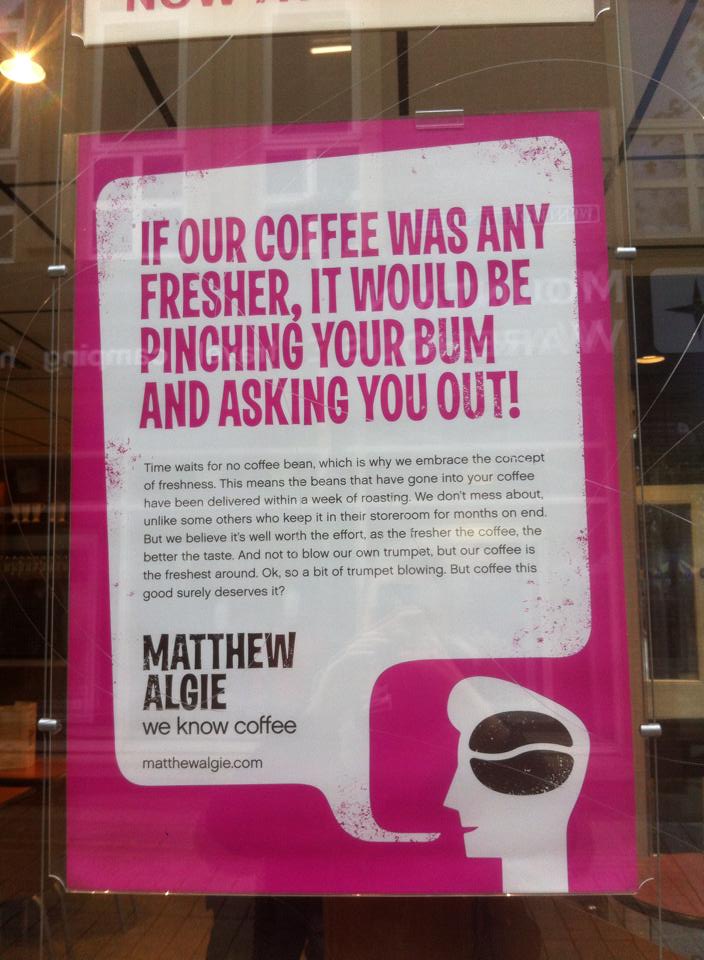
And then suddenly it’s the advert making a joke of the sexual violence that you have suffered. Whether it is the coffee company using groping to sell their product or the female model surrounded by men in what looks suspiciously like a ‘fashionable’ gang rape, for a survivor of sexual violence, it is repulsive to see it used as a tool to maximise profit. This is capitalist misogyny at its extreme; women’s bodies are used to sell products and so is their abuse. This is what rape culture looks like and it has got to stop.

coffee


Beauty is in the Eye of the…Media?

Author:

By Guest Blogger Aimee Polimeno
 

lupita-lightened

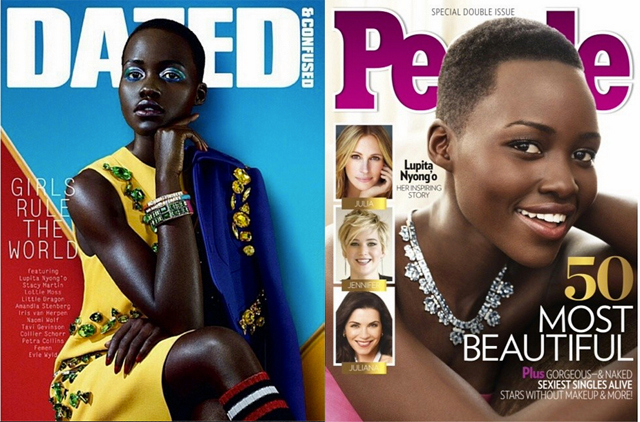
People Magazine’s Epic Photoshop Fail of Lupita Nyong’o

It’s no secret that our media-driven culture values an extremely narrow and stereotypical version of beauty, usually represented by a Size 2, photoshopped model. Most people know that judging and media photoshopping any girl larger than a size 4 has a detrimental impact on girls’ body image, and so it’s an issue fought by activists on many fronts. However, what many of us tend to overlook is that our culturally biased ideal of beauty does not encompass only body size, but also race.

The lack of models of various races and ethnicities in media, not to even mention the tendency to photoshop lighter skin tones on those few models and artists who do make the covers of magazines, is one thing. The association in movies and TV between violence and skin color is another. We teach children that when race is visible at all, light is right and everything else is…well, wrong. Consider seemingly harmless animated films like The Lion King, where our main man Mufasa and his family are a lighter fur color, while the evil and calculating Scar is a darker shade. Think about all those dark-skinned evil queens in Disney films.

Multiple studies have been done in psychology and sociology dealing with this early priming of children to favor light over dark, and the results are heartbreaking. A recent study conducted with young children in Mexico featuring a white doll and a black doll found the same results as a famous U.S. study conducted in the 1930’s by Kenneth and Mamie Clark. “Which doll is good?” the children were asked. “Which doll is bad?” “Which doll is ugly?” Almost all of the children associate positive words like “good” and “pretty” with the white doll and words like “bad” and “ugly” with the darker skinned doll. When asked why they like the white doll better, the children aren’t entirely sure; they just know that it’s the better doll. And here’s the heart-breaking part: when asked which doll looks most like them, the children struggle, knowing they have darker skin too, knowing that choosing the darker skin doll forces them to associate themselves with being bad and ugly.

These children are not born with a preference for lighter skin and the lighter dolls; this value has been forced on them unknowingly by the images they see and the stories they are told. This damaging set of values is deeply rooted in our culture and media and, as a result, we as consumers support and perpetuate the problem. There are entire shelves in drugstores dedicated to skin-lightening creams and hair relaxants, but these would not exist without significant demand. It’s difficult to be a critical consumer when we’re constantly barraged by images and ads telling us how we should look and what it means to be beautiful. But the fight has to begin with each one of us.
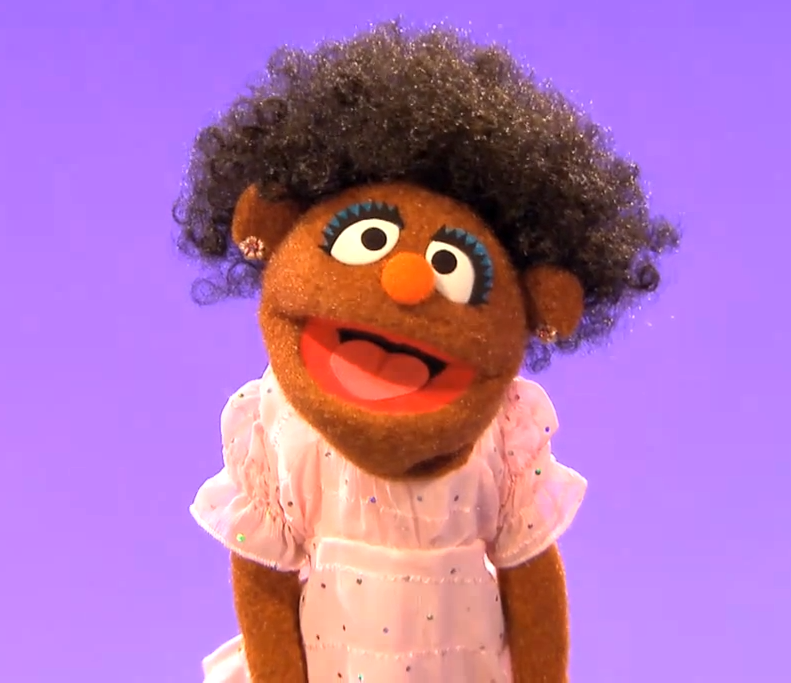
SS-Shirley

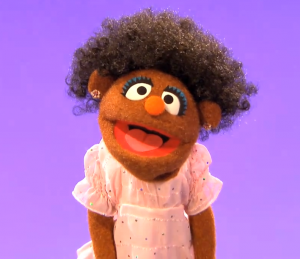
Shirley sings “I Love My Hair!”

There are some positive signs of change. In 2010, Sesame Street featured Shirley, an African-American puppet girl singing about all the reasons “I Love My Hair.” With over 5 million views to date, it’s clear how important (and rare) it is for young African-American girls to see a character representing them who believes her untreated hair is fun and gorgeous on its own.

Shirley and her message of self-love and acceptance became a sensation and an inspiration for young Black girls. If one puppet can make such an impact, why can’t we as a collective group follow Shirley’s lead? It starts with challenging what we are sold in the media and then looking in the mirror and within ourselves to realize that we are beautiful. I am beautiful, and you are beautiful. Together we can push back against the cookie-cutter image portrayed in our media so young girls of all shapes, sizes, and ethnicities can open a magazine and see a beautiful women who look like them. Like Shirley, love your hair, but also love your eyes, your curves, and your mind, and let the world hear it.

Shout Out To Guerrilla Girls! Thanks For Keeping It Real

Author:

By Guest Blogger, Barbara Mejia

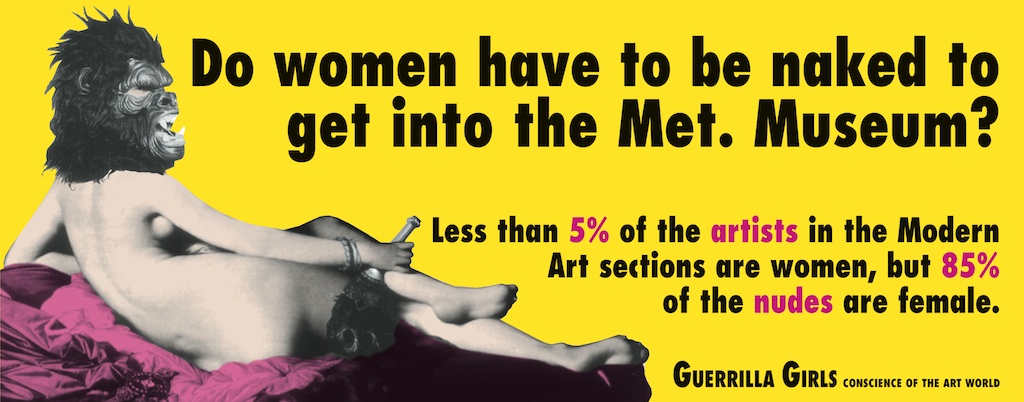
Naked1989

“We’re feminist masked avengers in the tradition of anonymous do-gooders like Robin Hood, Wonder Woman and Batman. How do we expose sexism, racism and corruption in politics, art, and pop culture? With facts, humor and outrageous visuals. We reveal the understory, the subtext, the overlooked, and the downright unfair.”

Guerrilla Girls burst on to the scene in the mid 80’s through the unconventional ways they drew attention to the lack of female representation in art. They made posters, hosted workshops and gave lectures, and here’s the curveball, they did it all wearing gorilla masks. I’m a fan of their campaign for public consciousness about the inequalities women face in all facets of our society, especially the art world, not only because of their important message but because of their radical masked avenger attire and because they receive no profit for their activism.

Each Guerrilla Girl takes the name of a famous artist and wears a gorilla mask, bringing humor and a bit of shock value to make their message the center of attention. The act of removing their identities from their activism ensures the message and information speaks for itself, optimizing the voice behind the mask and serving as a filter for society’s need to critique and judge female appearance. And this is what I love the most: the gorilla mask serves as a majestic metaphor for the fury that women facing invisibility and adversity carry, but are forced to suppress.

Their posters draw attention to the inequalities in the art world. There are so many amazingly talented female artists, but the art world has historically and continues to use the female body as a commodity. One can only imagine the difficulty a female artist faces when her profession views her gender as a prop for beauty and when her body of work doesn’t match up to what a male-defined art world most values.

As someone who works hard to be conscious of the ads and messages that are fed to me via popular media, I find it refreshing to see creative campaigns like the Guerrilla Girls. Their genuine goal to educate and empower the public and to make people more culturally and socially conscious of the inequalities that remain in our immediate surroundings inspires me.

A campaign motivated simply by the desire to educate and bring awareness to people is a rare occurrence in our capitalistic society, where the likes of Dove and Pantene sell products in the guise of making us aware of the adversities and social pressures women face. I don’t like the lingering feeling that I have to buy shampoo and soap in solidarity of their campaign. I don’t like the thought that buying their products to improve my appearance supports a campaign telling me that appearances don’t and shouldn’t matter.

This is a shout out to Guerrilla Girls, the original culture jammers. Thanks for keeping it real. Keep taking the country by storm!

The Ugly Reality About Beauty Standards

Author:

By Guest Blogger Maddie Wadington

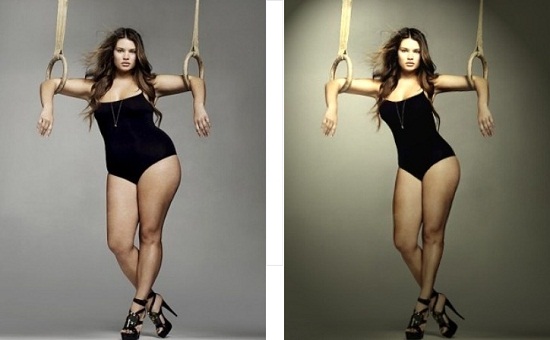
before-after-fat-model-edited-on-photoshop-2-by-Scarione-b

If you’ve been reading Time Magazine, The Guardian, Glamour, or just about any popular magazine or newspaper of late, you’ve seen reports of a new study that compares men and women’s perceptions of beauty. The researchers asked both men and women to judge which photo of a model, wearing various amounts of makeup, was the most attractive to them, which photo would be the most attractive to other men, and which photo would be the most attractive to other women. Both men and women believed that the models wearing more makeup would be judged as more attractive by men. Interestingly, that wasn’t the case. Results showed that more women than men preferred the model wearing more makeup.

So what’s going on here? The researchers conclude that women are holding themselves to a standard of beauty that does not exist. Well, yes, that sounds right. But in spite of their findings, these researchers assume this standard of beauty is created and maintained solely by men, reflecting their version of attractiveness. This doesn’t make sense to me. We’re bombarded 24-7 with photoshopped beauty ideals, so doesn’t media play an overwhelmingly large role, not only in the creation of this “make believe” version of beauty but also in maintaining this standard in girls’ and women’s everyday lives?

Sure, maybe there are more men making decisions about what images are created and sold, but are they doing this because of what they individually like or because they know what sells to women—what makes women anxious enough to say, “I want what she’s having?” Isn’t the bottom line all about marketing and money and grabbing women’s attention (and as we’ve seen from the likes of Veet’s recent ad campaign, anything goes). Isn’t the corporate bottom line and not individual male desire responsible for perpetuating these unrealistic beauty standards?

It is also interesting to note that the Time Magazine article that I read about this study was titled: “Science Shows Men Like Women With Less Makeup.” But I have to wonder, why is the emphasis placed on how men prefer women? What about considering how women view other women? From my experience, girls and women compare their own beauty to that of other girls and women (just like girls and women do in the media). Could the results of this study-women preferring the model with more makeup—simply be due to the pressures they feel to look like the models they see in magazines?

When we think about how males and females perceive beauty, it’s important to consider more than just the physical attractiveness between men and women. In our society, there are so many more factors affecting what we think of as attractive: like media, marketing, and the ways they impact our views of each other. This isn’t just about gender or even about biology. Only when we consider the larger forces at play here can we affect how these unrealistic beauty standards affect our relationships and how we feel about ourselves. Only then can our voices can be heard.


Thanks for Defining What it Means to Be a ‘Dude,’ Veet

Author:

By Christiana Paradis

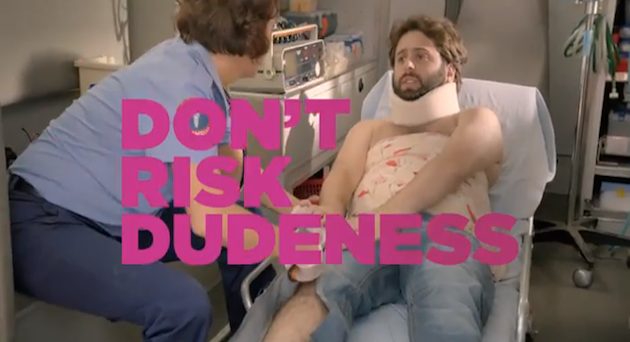
dudeness

Oh geez I didn’t shave AGAIN last night? Well actually, if we’re being honest, I haven’t shaved all winter! I call it winter insulation. It helped keep me cozy and warm during the Polar Vortex! But apparently I’ve misunderstood what I’ve been doing; I thought I was doing what I wanted to, as a woman, but Veet has shown me the light. My decision to not shave my legs has exposed me to a whole other category, a category they’ve so cleverly named “dude.” As they’ve expressed in their commercial series the very act of not shaving makes you at risk for ‘dudeness;’ it is an act of warfare against your femininity. Though this idea has been resonated over and over again and shaving conglomerates have always tried to make women feel like their bodies were wrong if they didn’t shave, this new ad campaign sinks to an all-time low.

It implies that even the smallest amount of stubble turns you from a beautiful woman into a hairy man and that should offend you! First of all, what’s wrong with a little stubble…or a forest!? Secondly, what makes me less female for having Yosemite National Park on my legs or under my arms for that matter? Thirdly, why did you think this was funny, Veet? Hold on, I’ll answer that for you… you thought this series was funny because any time we make men appear “less manly” and more feminine it’s automatically hilarious! A man getting a pedicure? Hahahahah. Laughing for days on end. A guy in a dress who can’t get a cab because of armpit hair? Fantastic! Pure comic genius! Not only do you insult one day stubble, but you insult anyone who exists outside of specific gender stereotypes. Gender is a spectrum not a dichotomy. Maybe after marketing execs realize this, we can stop telling people their bodies are wrong, because that is a cruel, tidal wave of a lie.

*Due to a strong public reaction these advertisements have now been dropped - yay!

Hey there!

We are Powered By Girl. We're young women who write for young women. We do it because we're fed up of media sexism, racism, transphobia and discrimination in all its forms. We create the alternative content that we want to see. Please have a look at our stuff, and join us!

Sign up to get our blogs in your inbox!